Most AI-written Shopify articles and collections never rank. But after testing dozens of AI workflows, we made one that consistently pushes pages to number one in Google. In this video, I’ll walk you through the exact prompts so you can copy them for your store.
Get the AI Prompts That Rank
Download the free resource to get our exact AI prompt workflow to create SEO-optimised Shopify collection pages that rank #1 on Google.
The Shortcut to Finding Rankable Keywords
Here’s where most store owners kill their SEO before it even starts. They guess keywords or trust a tool without context but that’s like throwing darts blindfolded. Every miss costs time, money, and momentum.
We saw this firsthand with a client of ours, TrueTrac. They have two flagship products. No giant catalog.
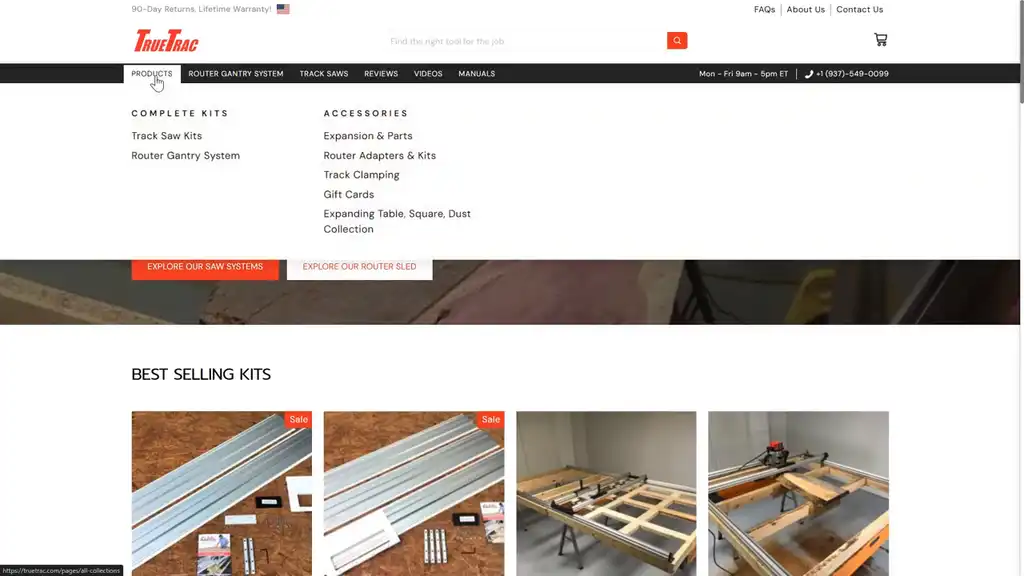
Everyone says you need a lot of products or a massive content budget to rank high.

Instead, we flipped the script. We started by finding three problem-based keywords their customers were already searching for. But here’s the twist: when we checked Google, the top results weren’t blogs at all. They were collection pages.

So we built collection pages as well by following the exact AI prompts you can get by downloading the free resource at the start of this article.

This instantly created SEO-optimized content that ranked them first for entirely new search terms.

This generated hundreds of free clicks made up of people ready to buy because problem-based searches convert.
Here’s the real lesson: SEO isn’t about churning out content. It’s about matching searcher intent. This is what Google loves.
How to Find Low-Competition Keywords Step by Step
Here’s how you do it:
Step 1: Grab a product or collection name from your store.
Step 2: Plug it into Ahrefs or Semrush.
No subscription? Install the free Shopify app SEO Expert: Digital Darts and open Search Performance. It shows the Google Search Console queries your store already gets impressions for, and anything ranking below position ten there is a keyword you can win without paying for a tool.

Step 3: Filter for KD 0–10 and domains under DR 10. Translation: look for terms where small sites already win.

Step 4: Search them in Google. If the top results are collections, don’t waste time writing a blog. Build a collection page.

Now you’ve got your first batch of SEO-ready topics without writing 50 random blog posts. But keywords alone don’t rank. The structure of your page makes or breaks it and this is where AI gives you an unfair advantage.
How to Use AI to Rank: Structured Content Right From the First Draft
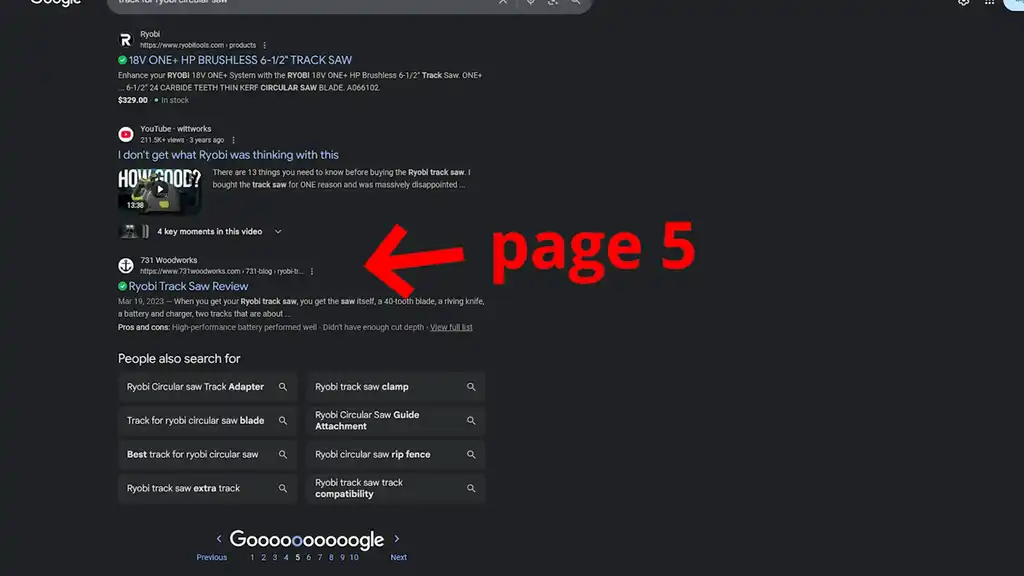
Most people still grind away at SEO articles the old way, typing for hours, rewriting paragraphs, and praying Google notices. And then… nothing. Their post disappears on page five, buried, never to be seen. That’s not just frustrating. It’s wasted traffic, wasted time, and in many cases, lost revenue.
For TrueTrac, we tested dozens of different AI workflows. Most of them looked good on paper, but the drafts still flopped in search. Until we cracked a system that completely changed the game. Instead of fighting Google, we built custom GPTs that structure content exactly how Google wants it.
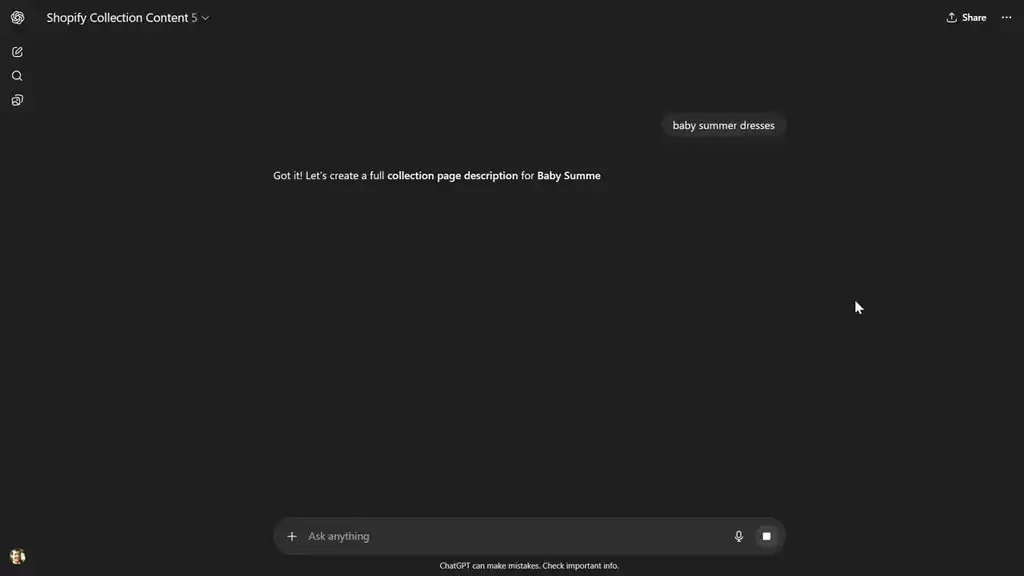
And for collection pages? Google doesn’t want fluff. It wants precise answers to exact queries. That shift alone cut our build time for collections from 2 hours to 20 minutes.
Here’s how it works. Say I want to rank a collection for “baby summer dresses”. Instead of guessing or outlining from scratch, I just drop that phrase straight into the GPT.

In seconds, it generates a clean draft that’s already optimized for structure and search intent. You can even test it yourself. I’ve linked free versions of both the article GPT and the collection GPT in the downloadable resource at the start of this article.
At that point, all I have to do is skim for details and polish. And just like that, I’ve got traffic-ready content without the grind.
That’s the raw power of AI workflows. But here’s the catch (and this is where most people fail). A perfectly structured draft won’t rank if you stop here. And that’s where the next step comes in.
Don’t Hit Publish After Draft One
Hitting publish after draft one is the single biggest SEO mistake. It’s why so many posts sit lifeless on page five, invisible to anyone searching.

Every time you skip this step, you’re basically handing free traffic to your competitors.
We refused to let that happen at TrueTrac. Instead of stopping at new pages, we refined them. The difference was night and day. By comparing each draft against the top three results, the pages went from zero traffic to 895 clicks in just three months.
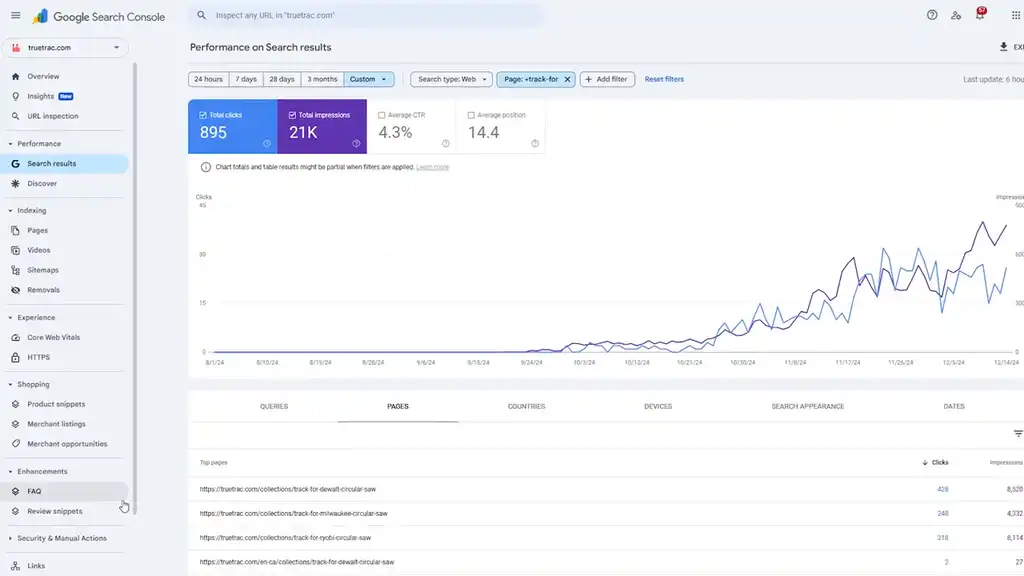
That’s hundreds of ready-to-buy visitors from searches that competitors once owned.
How to Refine Your AI Content Against Competitors
So how do you actually do it? With AI.
The same prompt I’ve made for you handles all of this automatically. All you’ve got to do is drop in your collection name and paste the top 3 competitor URLs. That’s it.
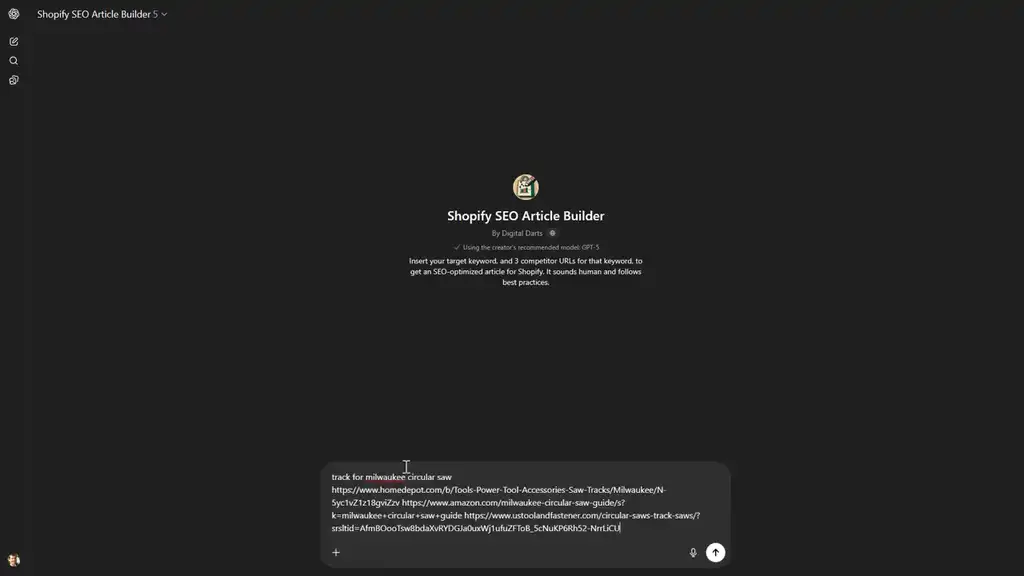
In seconds, it breaks down the exact questions people are asking, shows you what competitors are covering that you’re not, and spits out a list of real SEO upgrades ready to copy and paste.
It’s not vague fluff like “add more images.” You get a precise, competitor-backed checklist of content gaps and improvements. That’s how you leapfrog straight past page five without any guesswork.
You can take this further. Rather than pasting competitor URLs by hand, SEO Expert: Digital Darts exposes an MCP connector so ChatGPT or Claude can read your live audit and Search Console data directly, then write against your real numbers instead of whatever you remember to paste in.
The scary part about AI today is that even if you master this process, Google is still stealing your traffic with AI Overviews. This means less sales for you from organic search. So learn this simple Shopify SEO trick that’s already beating Google’s AI and how you can protect your clicks before they vanish.
What You Should Do Next...
Get More Free Tactics
Subscribe for tutorials and tactics to grow your Shopify store. You'll also immediately download the 30+ page deck "4 Rules of Store Growth: To Sell More on Shopify, Escape Work You Hate, Boost Profit, and Have a Business You're Proud Of".
Work With Us
We partner with a small number of Shopify stores each quarter to scale paid ads, SEO, and conversion rate. If you're serious about growth, apply below. If it's a fit, we'll schedule a call to map out your plan.
APPLY TO WORK WITH US