Around 99% of Shopify stores will never rank first in AI or Google because not enough good websites link to them.
After 10 years of growing Shopify stores with every SEO tactic out there, I can tell you links are still the single biggest lever you can pull. They’re how Google decides who to trust, and now they’re how AI tools like ChatGPT decide which stores to mention.
You can have the best products, the cleanest theme, and a hundred blog posts, and still stay invisible. If no one links to you, as far as Google and AI are concerned, you barely exist.
In this guide I’ll show you the exact link building strategies we use as part of our Shopify SEO service, the ones your competitors are too lazy or scared to do, and how to run them yourself without burning your whole week.
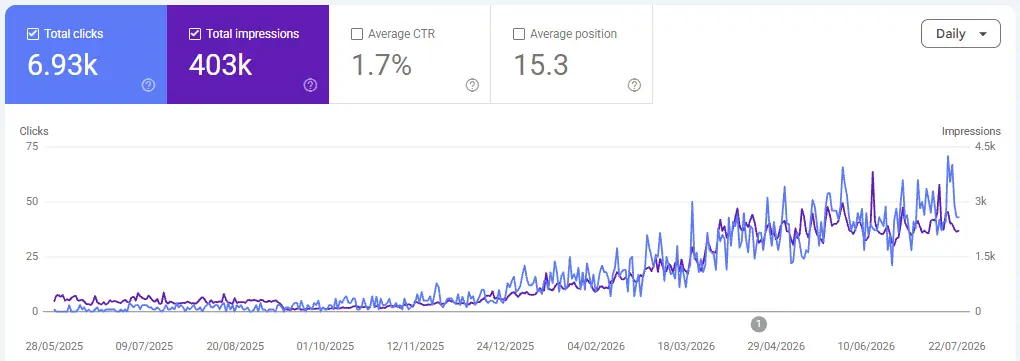
Here’s one Shopify store’s clicks and impressions in Google Search Console after we used these strategies.
Get more backlinks for your store, free
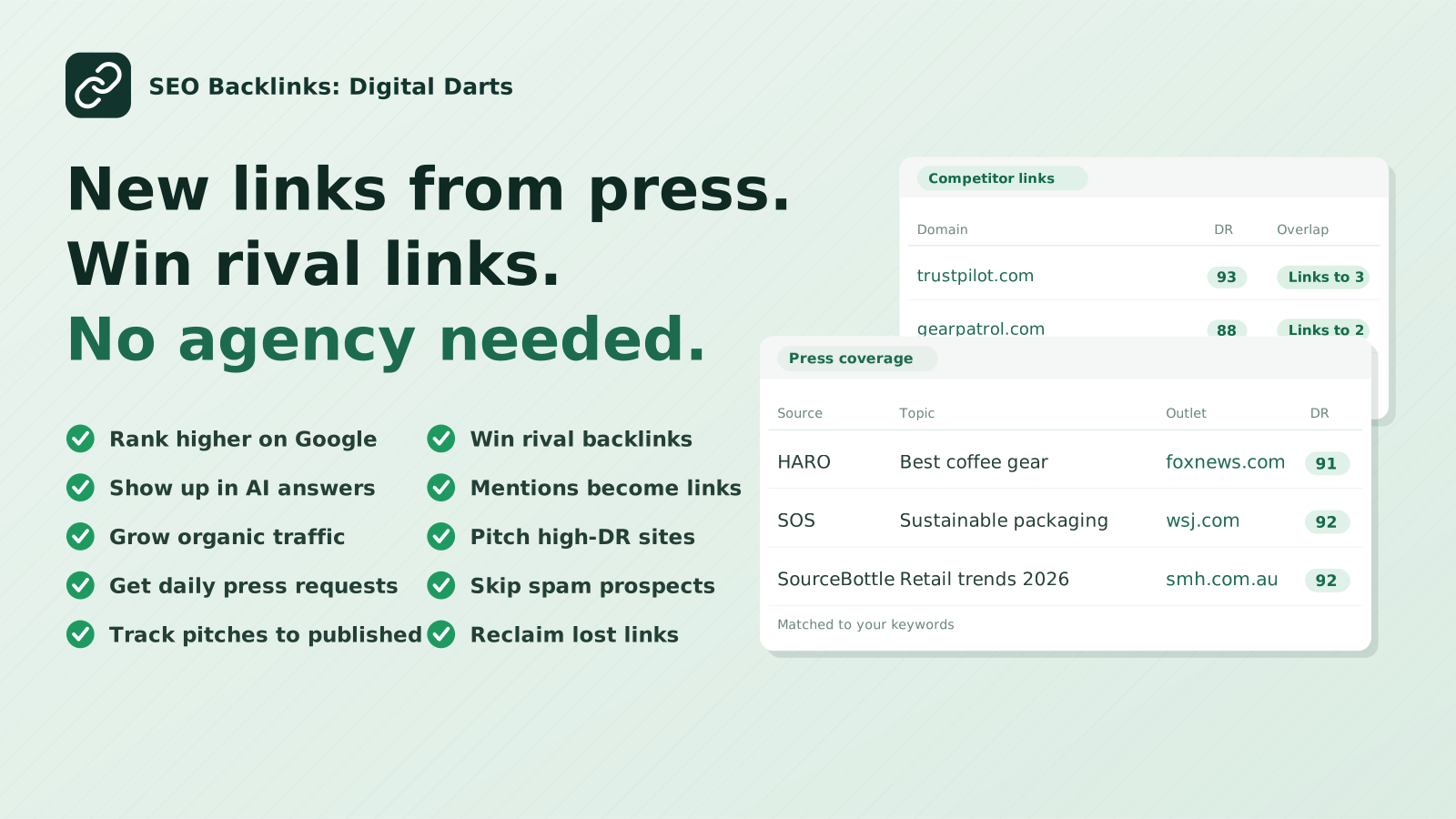
We built a free Shopify app, SEO Backlinks by Digital Darts, that finds the media opportunities and competitor links worth chasing and keeps them in one place.
What Shopify Link Building Actually Is
Link building is the work of getting other websites to link to yours. On Shopify, that usually means links pointing at your homepage, your blogs, your collection pages, and your product pages.
Product and collection pages are the hard part, and they’re why most generic SEO advice falls apart for stores. Nobody wakes up to give a random, unknown brand a free backlink. People link to helpful articles, funny videos, and original research. Plenty of sites expect payment. They don’t naturally link to your “Blue Ceramic Mug.” So Shopify link building means giving someone a reason to link to your store, often by helping them fill a gap in an article they’re already writing.
Do it well and it compounds. Every quality link makes the next one easier, lifts your rankings in Google, sends real buyers, and teaches AI that your brand is worth citing.
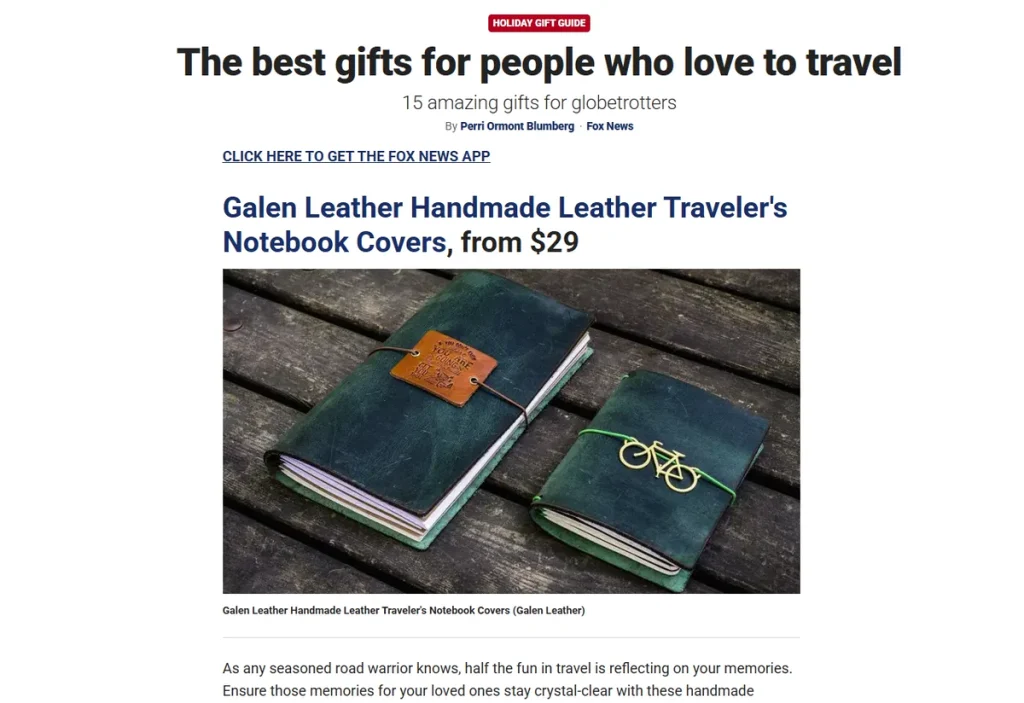
For example, a journalist putting together a Fox News gift guide for travellers asked for product suggestions. We pitched Galen Leather’s notebook covers as a gift for travellers who like to keep a journal. The journalist included them in the guide and linked directly to the collection page.
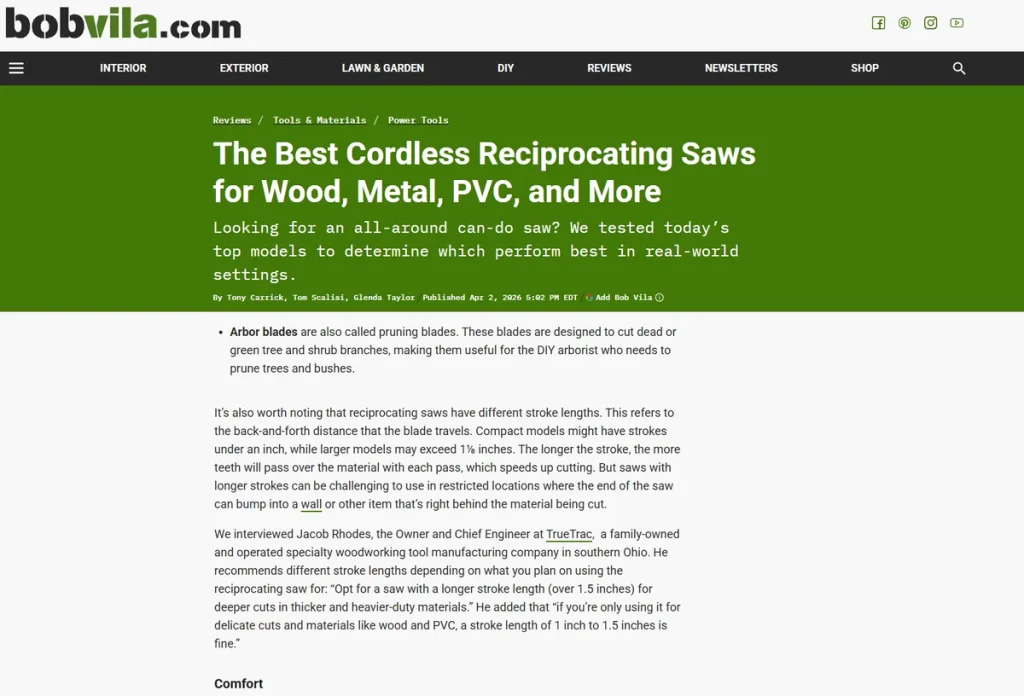
A product feature is only one route. Another journalist request called for expert advice on cordless reciprocating saws. We put forward Jacob Rhodes, TrueTrac’s owner and chief engineer. His expertise gave the writer something useful to include, even though the article wasn’t about a TrueTrac product. The store earned a link on BobVila.com, an established publication.
Why It’s Hard for Shopify Stores
The bigger the brand, the easier links are to get. Nobody’s talking about your brand yet. Apple releases a phone and the whole internet writes about it unprompted. You put out a press release and nothing happens. Nike puts out the same news and it gets picked up everywhere.
Your products are often the same ones fifty other stores sell. And you’re up against mega-retailers with PR teams and budgets you’ll never match. When someone does write about your category, they usually link to Amazon or a big brand, not you.
But hard is good news for you, because almost none of your competitors do it properly. Most give up after a week or chase the easy junk links that do nothing. So the moment you commit to doing this the right way, you’re only competing with the tiny handful of stores willing to put in the work. That’s a game you can win.
How to Spot a Link Worth Chasing
Before we get to tactics, you need to know which links are worth your time.
If I offered you $5,000 or $1, you’d take the $5,000 every single time. A mention in Business Insider or on Shopify’s own blog is that $5,000 link. A listing on some random directory nobody visits is the $1 scrap that looks shiny and does nothing.
So here’s the rule I live by: the easier a backlink is to get, the less it’s worth. Anyone can submit to a directory in thirty seconds, which is exactly why it doesn’t give you a competitive advantage.
When you’re looking at a potential link, judge it on these four things, in order:
- Relevance. Is this site about your niche, your product category, or business in general? A relevant link from a smaller site usually beats a random link from a giant one.
- Real traffic. Do actual humans read this site? A link that sends zero visitors is worth far less than one that sends buyers.
- Editorial placement. Is the link inside real content a person wrote, or stuffed in a footer with a thousand others?
- Authority. Domain Rating (DR) matters, but only as a tiebreaker. Prioritise trusted publications that rank for keywords and appear in AI citations. A high DR on an irrelevant site with no traffic means little.
| A $5,000 link | A $1 link |
|---|---|
| Business Insider quotes your founder | Free directory listing |
| A supplier links to you as a stockist | Blog comment with your URL |
| A niche blog reviews your product | Forum signature link |
| A journalist cites your original data | Bulk “guest post” on a link farm with zero traffic |
Keep this table in your head for the rest of this guide. Every strategy below is built to earn links from the left column.
Lay the Foundations First
If you skip these four foundations, every link you build afterwards does less for your rankings.
1. Clean Up Your Store’s On-Page SEO Before Building Links
A backlink can’t do its best work if it points to a slow, broken, or poorly optimised page. Get your collections and product pages in order, and give search engines enough context to understand each one. Search engines are smart, but clear titles, useful copy, internal links, structured data, and other relevant signals remove ambiguity.
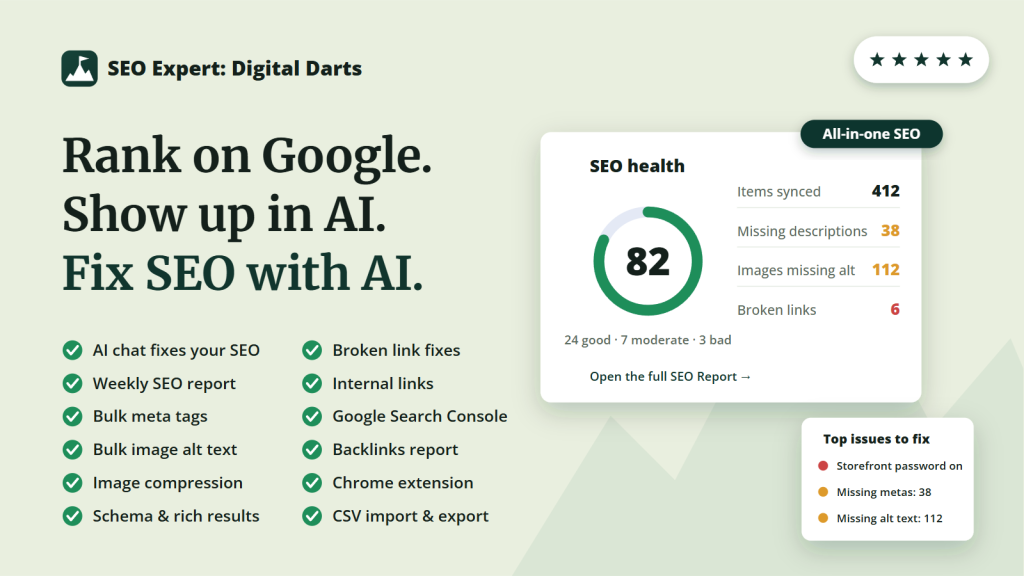
Use our Shopify SEO Expert Guide to work through your on-page and technical SEO, or let our free SEO Expert Shopify app audit your products, collections, pages, blog posts, and navigation. It ranks issues as Critical, Warning, or Info, shows how many pages each problem affects, and takes you directly to the affected pages.
Use it to:
- Find broken internal links and redirect deleted URLs
- Fix missing or weak titles and meta descriptions
- Apply metadata templates across large catalogues
- Add missing image alt text
- Check whether important pages are hidden from search engines
- Find redirect chains and other technical problems
- Add and manage schema markup
- Connect Google Search Console to use real search query, impression, click, and ranking data
Fix Your Shopify SEO Today
Get the SEO Expert: Digital Darts app from the Shopify App Store. Free plan forever, plus a 14-day free trial of Pro.
2. Decide Where Your Links Should Point
Most store owners point every link at their homepage. Homepage links are fine, but your money is usually in your collection pages, because those are the pages targeting your commercial keywords like “black linen dresses” or “raw dog food online.”
Make a short list of your most important collections and products: your top three to five collections, and your hero products with search volume. This is your link target list. From now on, when you earn a link, steer it toward one of these pages instead of scattering links randomly.
3. Strengthen Your Internal Linking
Link authority flows through your internal links, so a messy internal structure leaks the value of every backlink you earn.
Make sure your priority collections are linked from your navigation, relevant product pages, blog posts, and buying guides. Use descriptive anchor text that tells shoppers and search engines what the destination page covers.
Look for older blog posts that already attract traffic or backlinks, then add natural links from those posts to the collections and guides you want to strengthen. This gives existing authority a clear path through your store and helps search engines understand which pages matter most.
4. Build Your Brand Presence
Claim your brand name on the major social platforms, complete your Google Business Profile if eligible, and add your business to Apple Business Connect. Keep your name, website, contact details, address and branding consistent across every profile.
Strengthen your About page with your founder story, location, experience, and original photos.
9 Shopify Link Building Strategies That Actually Work
These are the strategies my team uses on real Shopify stores. Start at the top, because they’re roughly ordered from highest impact down.
Strategy 1: Digital PR (The One That Beats Them All)
If you only do one thing from this list, make it this. Digital PR means getting quoted by journalists and featured in real publications, and it’s how we landed backlinks for our client Blue Bungalow from Reader’s Digest, Business Insider, and Shopify itself. I ran the same playbook on our own site and pulled mentions from Google, Microsoft, HubSpot, and the Daily Mail.
The way in is journalist request platforms. Reporters post that they need a quote from an expert, you send a sharp response, and if they use it, you get a link from a huge publication. You don’t need contacts or a PR agency, just a face in your business to speak as the expert, a good pitch, and speed.
This strategy is deep enough that I wrote a full walkthrough on it. Read our complete guide to ecommerce digital PR once you finish this article. To make it easy, our free SEO Backlinks app watches the journalist request platforms for you and matches every opportunity to your keywords, so the requests worth answering land straight in your feed.
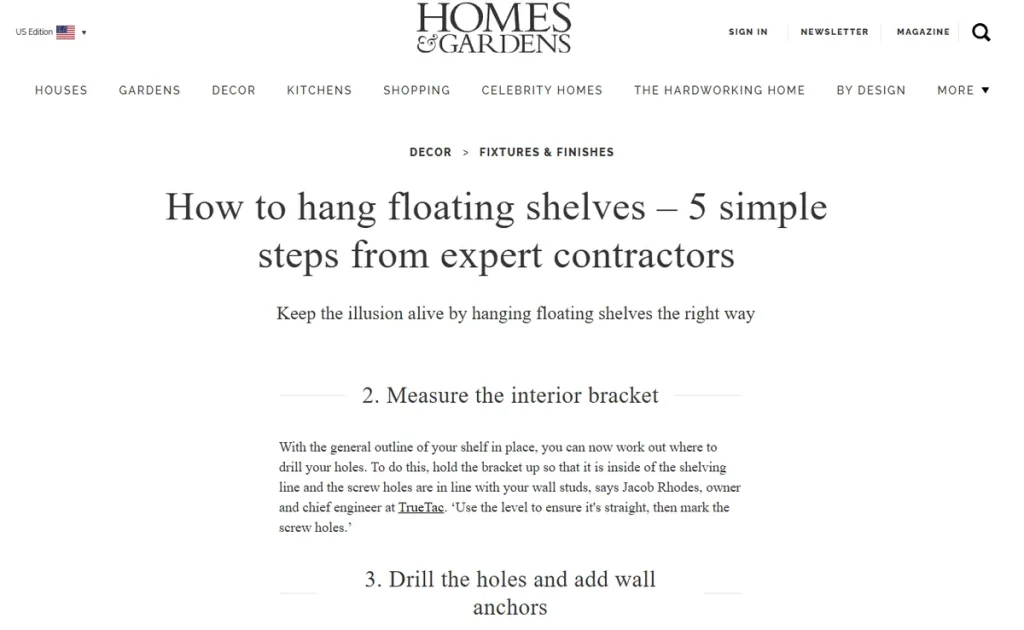
For example, we pitched TrueTrac owner Jacob Rhodes to Homes & Gardens for a guide to hanging floating shelves. The writer used his advice and linked to TrueTrac in the article.
Strategy 2: Steal Your Competitors’ Backlinks
Every link your competitor has is a link someone already decided to give a store like yours. That makes their backlink profile the best list of prospects you’ll ever find.
Pull your top competitors’ backlinks with a tool like Ahrefs, or let our app do it for you, and look for links you could realistically get too. If a blog wrote a “best stores for X” roundup, pitch to be added. If a supplier lists them as a stockist, you probably qualify. If a niche site reviewed their product, offer yours.
The gold is what SEOs call link intersect: the sites that link to two or more of your competitors but not to you. If three of your rivals all got a link from the same place, that site clearly links to stores like yours, so your odds are high.
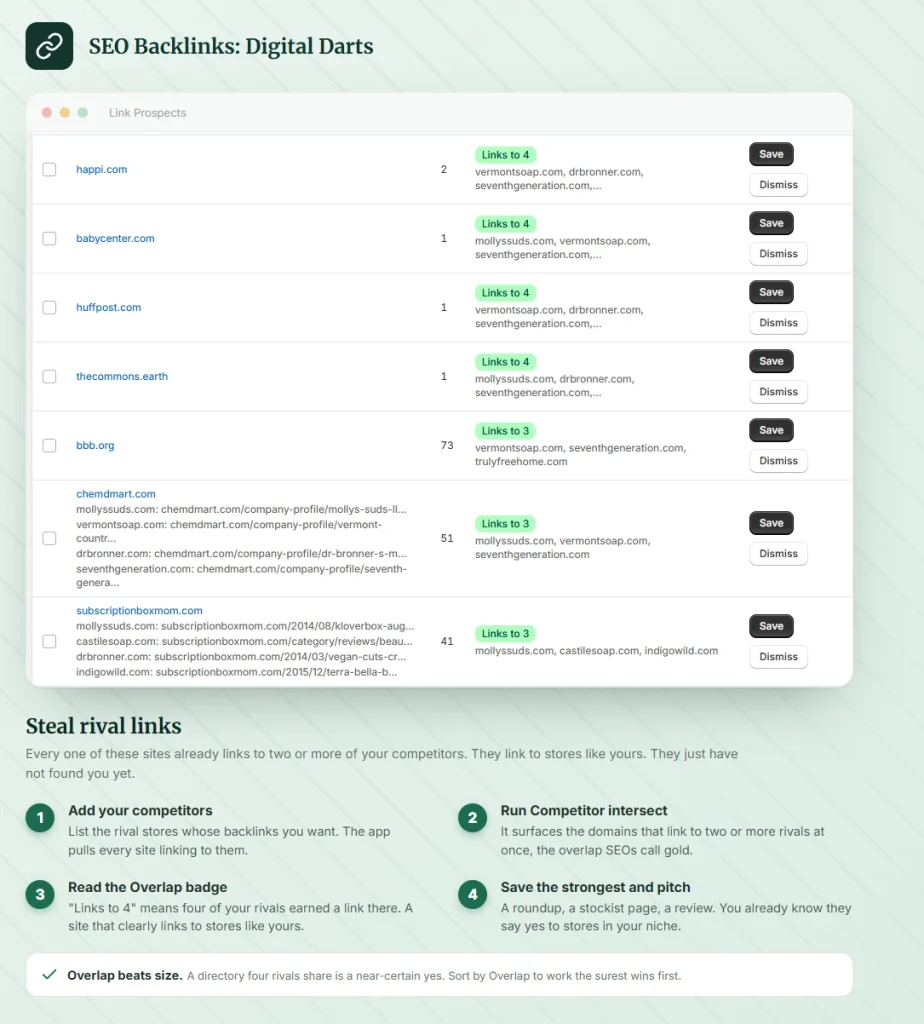
This is a real link intersect we ran inside our app for a cleaning product brand. Every domain in the list already links to two or more of their competitors, which makes each one a warm target to pitch.
Strategy 3: Reclaim Your Unlinked Mentions
This one is almost free money for brands with an existing presence. All over the web, people mention brands without linking to them. A blogger writes about your product but forgets the link. A journalist names you but points nowhere. Each of those is a link waiting for a two-line email.
Find every page that mentions your brand or a distinctive product name without linking to you, then send a friendly note thanking them and asking if they’d mind adding a link. Because they already chose to talk about you, the yes rate is far higher than cold outreach. The hard part is finding the mentions, which is where our app helps.
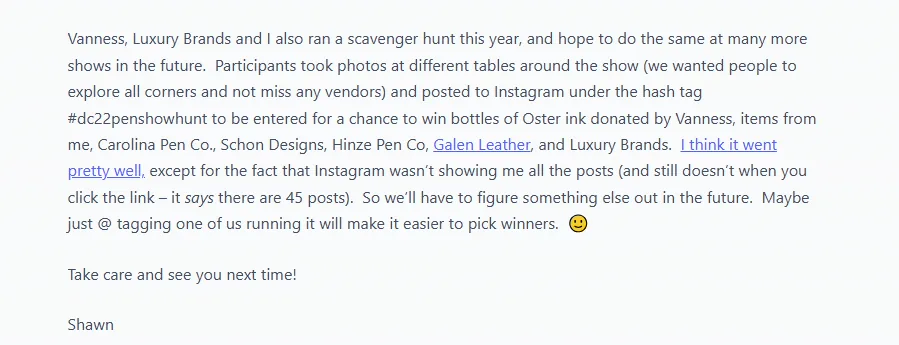
Here’s one we reclaimed for Galen Leather. A blogger recapped a pen show our client had attended and mentioned Galen Leather without linking to the store. We reached out, and the blogger added a link. As you can see in the screenshot, the other brands mentioned in the same section are still unlinked.
How the app does the finding
You give it one distinctive phrase, your brand name or a product only you sell. The app searches the web for every page using that exact phrase, then pulls the list of sites that already link to you and removes them. What’s left is a clean list of pages that mention you but don’t link to you.
The email itself takes a minute. Start from this one, and change it to suit the page and how they mentioned you:
Strategy 4: Supplier, Stockist, and “Where to Buy” Links
If you sell products from brands or manufacturers, you have easy links sitting right there. Most brands keep a “where to buy” or “our stockists” or “find a retailer” page, and they’re usually happy to add you, because listing you helps them sell too.
Make a list of every brand you carry, find their stockist page, and ask to be included. Then widen it to industry associations, local business groups, and any supplier or partner you work with. These links come from relationships you already have. They’re relevant and permanent, and your competitors rarely bother to claim them.
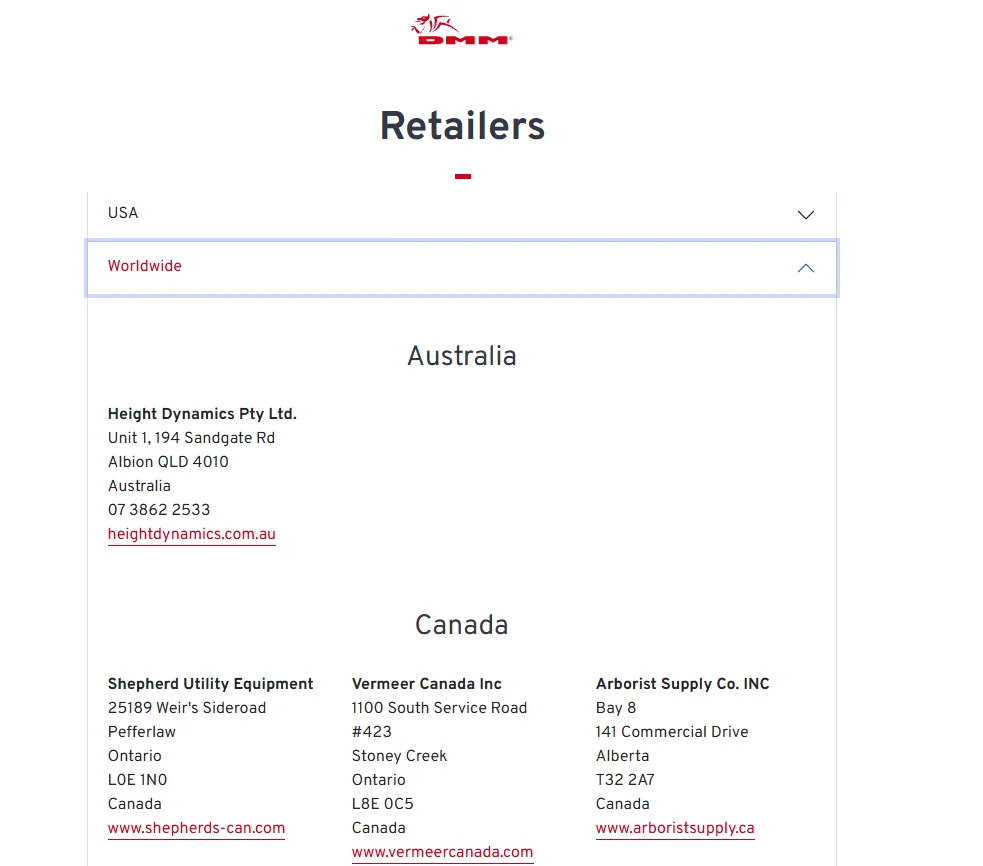
Height Dynamics sells DMM climbing equipment, but the store was missing from DMM’s retailer page. We asked DMM to add Height Dynamics and earned a relevant link from a brand it already stocked. As the screenshot shows, no other retailer in its region had claimed a listing there.
Strategy 5: Product Seeding and Roundups
Journalists and bloggers constantly build gift guides and “best of” roundups, especially heading into the holidays. Getting your product into those lists means a relevant link and potential ready-to-buy traffic.
The hard part is finding the right pages and people, so here’s how we do it.
Mine Google for roundups that already exist. Search operators surface these quickly. Run a few of these with your product and category swapped in:
- “best [your product] 2026”
- “[your niche] gift guide”
- intitle:”gift guide” [your niche]
- “[competitor product] review”
- “[your niche]” intitle:blogger
There are hundreds of variations. Our free Link Research Tool runs the proven ones for you.
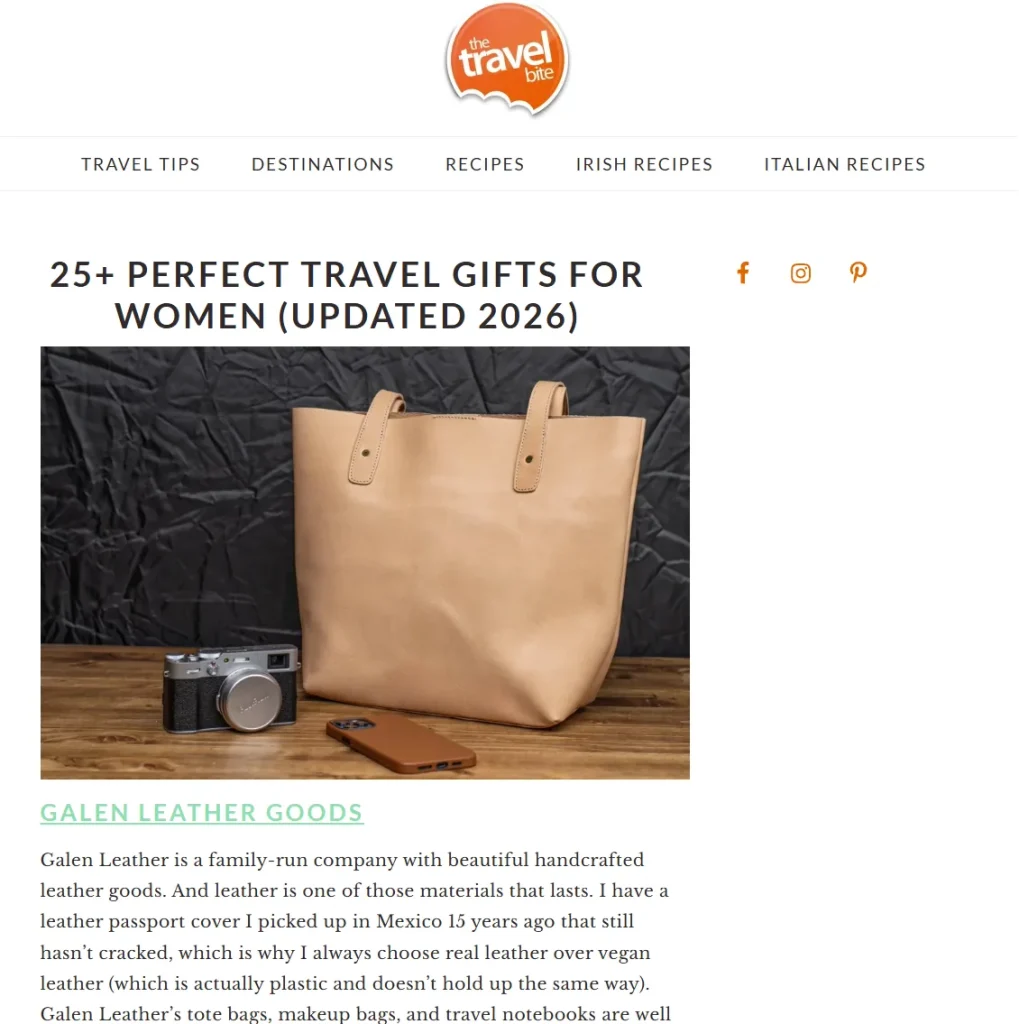
We pitched Galen Leather to the travel blog The Travel Bite, which featured it in a travel gifts guide. The guide also ranks in Google and gets organic traffic, so the link can keep reaching readers looking for travel gifts.
Check the roundups your competitors are already in. This overlaps with Strategy 2. If a writer has published “best eco water bottles” and listed three of your rivals, that page is a warm target. Pull competitor backlinks, filter for roundup and review pages, and pitch to be added.
Look past blogs. For YouTube, search your keyword in Google and switch to the video tab. For Instagram and TikTok, search your category hashtags on the platform.
A creator with no website can’t hand you a dofollow link, and that matters less than it used to. Google gives video its own carousels and surfaces YouTube results high on product and “best of” queries, so a review on a big channel can outrank most blogs you’d pitch. AI tools lean on the same trusted platforms when they decide which brands to name. A video review, a tagged Instagram post, and a Reddit thread all feed the picture of your brand that Google and AI systems build.
Qualify before you pitch. Three questions decide whether an opportunity is worth your time: is the site still being updated, do real people read it, and will this person actually reply? Skip the celebrity accounts. The bloggers with smaller, engaged audiences answer their own email and say yes far more often.
Give them a reason to say yes. Nobody adds you to their roundup because you asked nicely. Offer a free sample, a partnership, an exclusive code for their audience, or an affiliate program so they earn on every sale that post sends you. Money talks.
Get creative with the angle. The same product fits more lists than you think. We pitched our client’s leather journal covers to Christian bloggers and vloggers as Bible covers, which opened a whole category of roundups their competitors weren’t in. Ask what else your product could be called, and who writes about that.
Watch the journalist requests. Some of the best gift guide placements need no cold pitch, because the journalist comes looking for you. Every year from around September, reporters post requests for products to feature in Christmas and holiday guides. Answer one of those and you can land in a major publication’s roundup. Our SEO Backlinks app watches those platforms and matches the requests to your keywords, so the gift guide calls land in your feed while they’re still open.
Strategy 6: Guest Posting With Commercial Intent
Guest posting still works if you skip the volume game on junk blogs and write useful articles for real, relevant sites your buyers read.
Target blogs in your niche and adjacent ones, pitch a topic that helps their audience, and link naturally to your relevant collection or product inside the content. One guest post on a respected niche site beats fifty on link farms every time.
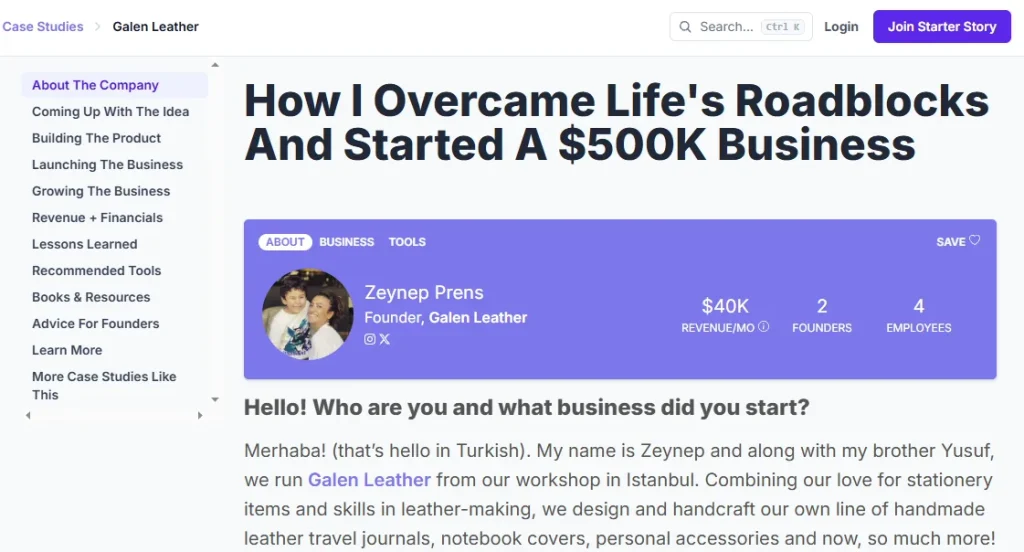
We got our client Galen Leather featured on Starter Story simply by letting their founder tell their story.
Strategy 7: Turn Discounts Into Links
Deal sites can send both links and sales, but you have to be picky. The big, trusted ones with real traffic are worth it.
Stick to the reputable deal and coupon platforms in your market, and offer a genuine, exclusive discount code. You get a link, a burst of traffic, and buyers who came specifically to spend.
In our experience, some of the best discount links come from outside traditional coupon sites. Get creative within your niche. Offer an exclusive discount to relevant clubs, professional associations, community groups, charities, local organisations, or member-benefit programs.
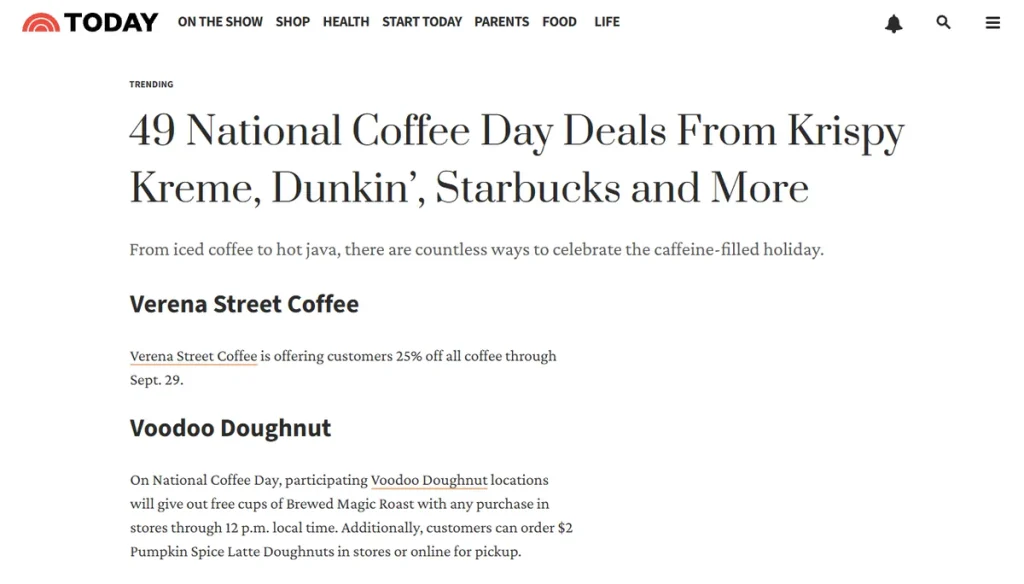
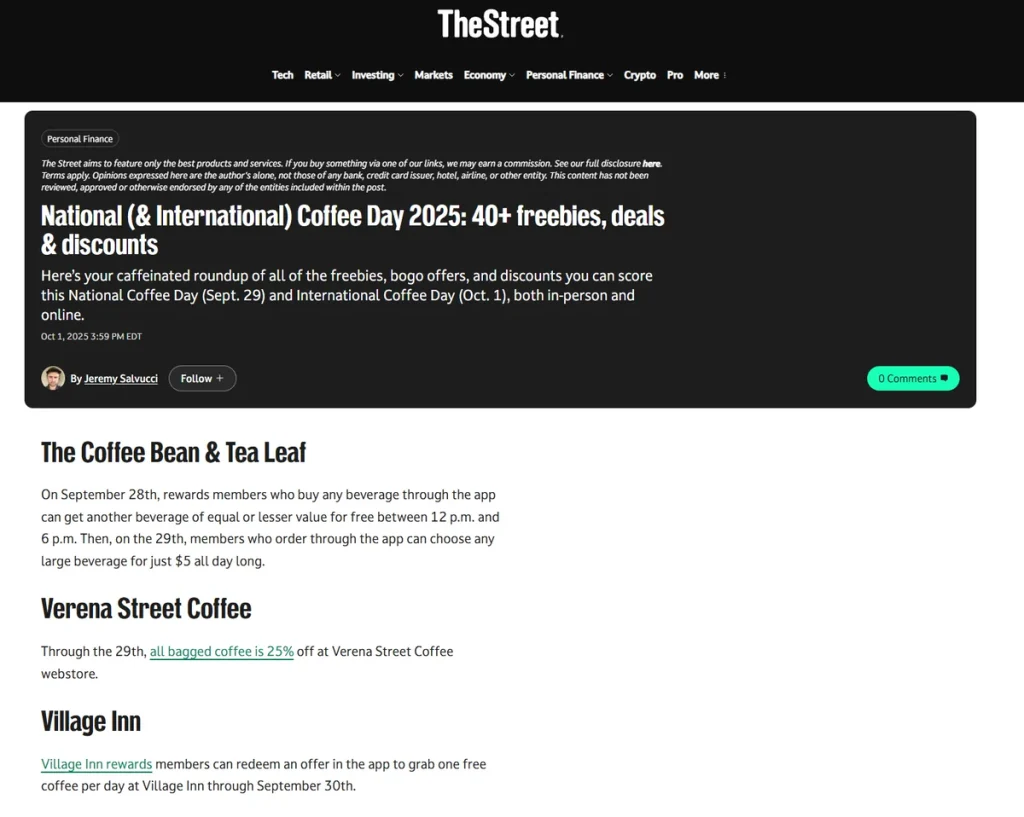
National Coffee Day gave us a timely angle for Verena Street Coffee. TODAY and TheStreet featured its offer in their deal roundups and linked to the store, in front of readers who were already looking for a coffee deal.
Strategy 8: Community, Local, and Cause Links
Some of the most trusted links come from the real world. Sponsor a local event, support a charity, offer a scholarship, or partner with a community group, and you often earn a link from an organisation people trust.
Your business has a story, a community, and causes it can support, and each of those is a link a competitor can’t copy. These take a little more effort, which is exactly why they’re worth so much.
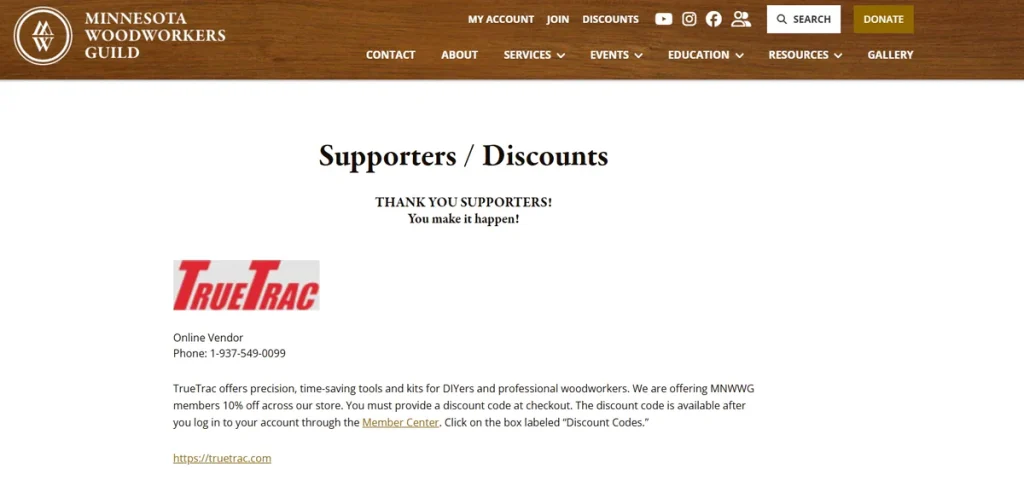
For example, TrueTrac’s support of the Minnesota Woodworkers Guild earned it a backlink from a site dedicated to its woodworking niche.
Strategy 9: Affiliate Program
This is the hardest one on the list, and for most stores it’s not where you start. Amazon owns this space. Their Associates program is so widely used that the moment a creator writes a “best X” roundup, the affiliate link they reach for points at Amazon, not you. Competing with that on affiliate links alone is a fight you’ll usually lose.
So treat an affiliate program as fuel for the other strategies. Once a creator can earn a commission on every sale they send you, they suddenly have a reason to build the roundups, reviews, and comparison posts that link to your store. It turns a cold pitch into a warm one, because now the answer to “what’s in it for me” is a real number. That makes Strategies 5 and 6 easier to land.
Most affiliate links are tagged nofollow or sponsored, so they pass little direct ranking power in Google. The real value is the traffic, the sales, and the relationships. The creator you pay today could give you an editorial mention tomorrow, and they’re already putting your brand in front of a ready-to-buy audience.
To win where you can, give creators a reason to choose you over Amazon: a higher commission than Amazon’s few percent, a longer cookie window, and exclusive products or bundles they can’t link to anywhere else. Then go and recruit the creators already reviewing your category, instead of waiting for them to find you.
The software you run your program on can quietly kill it before it starts. Your ideal affiliates, the bloggers and influencers in your niche, already juggle logins for Amazon Associates and half a dozen other affiliate networks. Almost none of them will create yet another account for a program they’ve never heard of. So go mainstream. Run your program on a network the creators in your niche already use, so joining you takes one click.
Bonus Strategy 10: Publish Content People Cite
Blog content can attract links without outreach, but only when you pick topics writers need to reference and rank high enough for them to find you.
Statistics pages are the most common example. Journalists and bloggers regularly search for figures to support their articles, so a well-researched statistics page can earn links over time. Original surveys, industry data, calculators, definitions, benchmarks, maps, and detailed comparison guides work the same way.
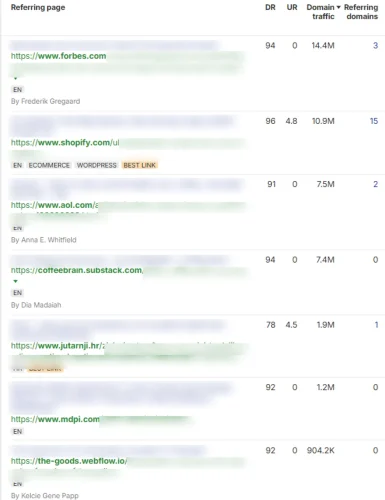
Here’s one we published for a client. It sits in the top three for its main keywords, so writers looking for a figure search, find the page, and cite it. It has 60 backlinks so far, including links from Forbes and Shopify, and we didn’t pitch any of them.
Scaling It Without Losing Your Mind
Most people read an article like this, go hard for a week, then quietly stop. Link building only works when it’s a habit. So the goal is to make it small, repeatable, and mostly automatic.
Three things make that possible.
Automate the prospecting. The slowest part is finding opportunities: the journalist requests, the competitor links, the unlinked mentions. When you have to go hunting for them, you stop. When they land in front of you, you keep going.
Track everything in one place. For every opportunity, record the source, the outlet, the page you pitched, the status, and the published link when it lands. You’ll often never hear back from a journalist who quotes you, so you need a record to check what actually went live.
Make it a daily ten minutes. Set a repeating task to check your opportunities and send one or two pitches. Consistency is what separates the stores that win links from the ones that give up.
That’s why we built SEO Backlinks, our free Shopify app. It watches journalist requests across HARO, SOS, SourceBottle, Connectively, and more, and matches them to your keywords. It mines your competitors’ backlinks and finds your unlinked mentions, so Strategies 1, 2 and 3 take minutes instead of hours. It keeps every pitch and prospect in one tracker, and it’s free to install, so you can run the whole system above from inside your Shopify admin.
Start Building Links That Matter
The strongest link building looks a lot like brand building. Create products people want to discuss. Publish ideas worth citing. Build relationships with journalists, creators, customers, clubs, and businesses in your niche. Give people a real reason to mention you.
Each link becomes evidence that your brand exists beyond its own website. Those mentions help search engines understand who you are, give AI systems more credible sources to draw from, and put your name in front of people who may become customers.
Do this consistently and you’ll climb Google and become one of the stores AI names when someone asks for the best in your niche.
Now go build some links. Or hand your whole SEO to our top Shopify SEO team, and we’ll get your store ranking in Google and AI.
Rank Higher With Free Backlinks
Get link opportunities for your store, right in your Shopify admin.
What You Should Do Next...
Get More Free Tactics
Join over 5,000 subscribers. I send what's working in Google Ads, SEO and Meta Ads, taken from the Shopify accounts we run.
Work With Us
We partner with a small number of Shopify stores each quarter to scale paid ads, SEO, and conversion rate. If you're serious about growth, apply below. If it's a fit, we'll schedule a call to map out your plan.
APPLY TO WORK WITH US